Ensuring Justice for War Propaganda to Protect Victims and Prevent Violence: Anna Vyshniakova Speaks at an International Event in Paris
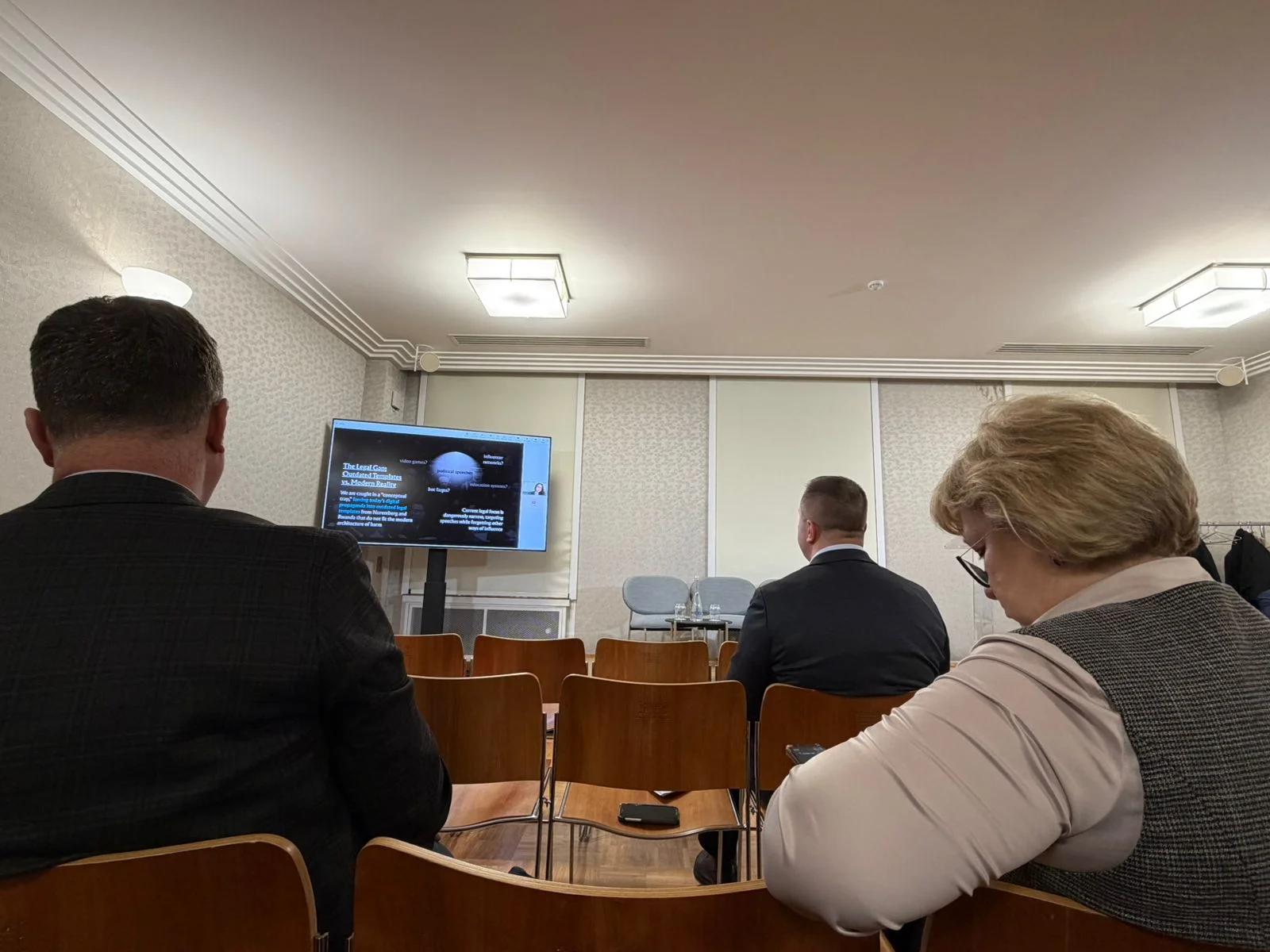
On 20 February 2026, an international event titled “After 4 years of a large-scale invasion in Ukraine, what rights do the victims have?” took place in Paris at the Maison de la Chimie. The event focused on the rights of victims of Russia’s aggression against Ukraine and on mechanisms of international accountability for the gravest international crimes. It brought together researchers, legal professionals, civil society representatives, and experts in international law to discuss ways to ensure justice and strengthen protection for victims of war.
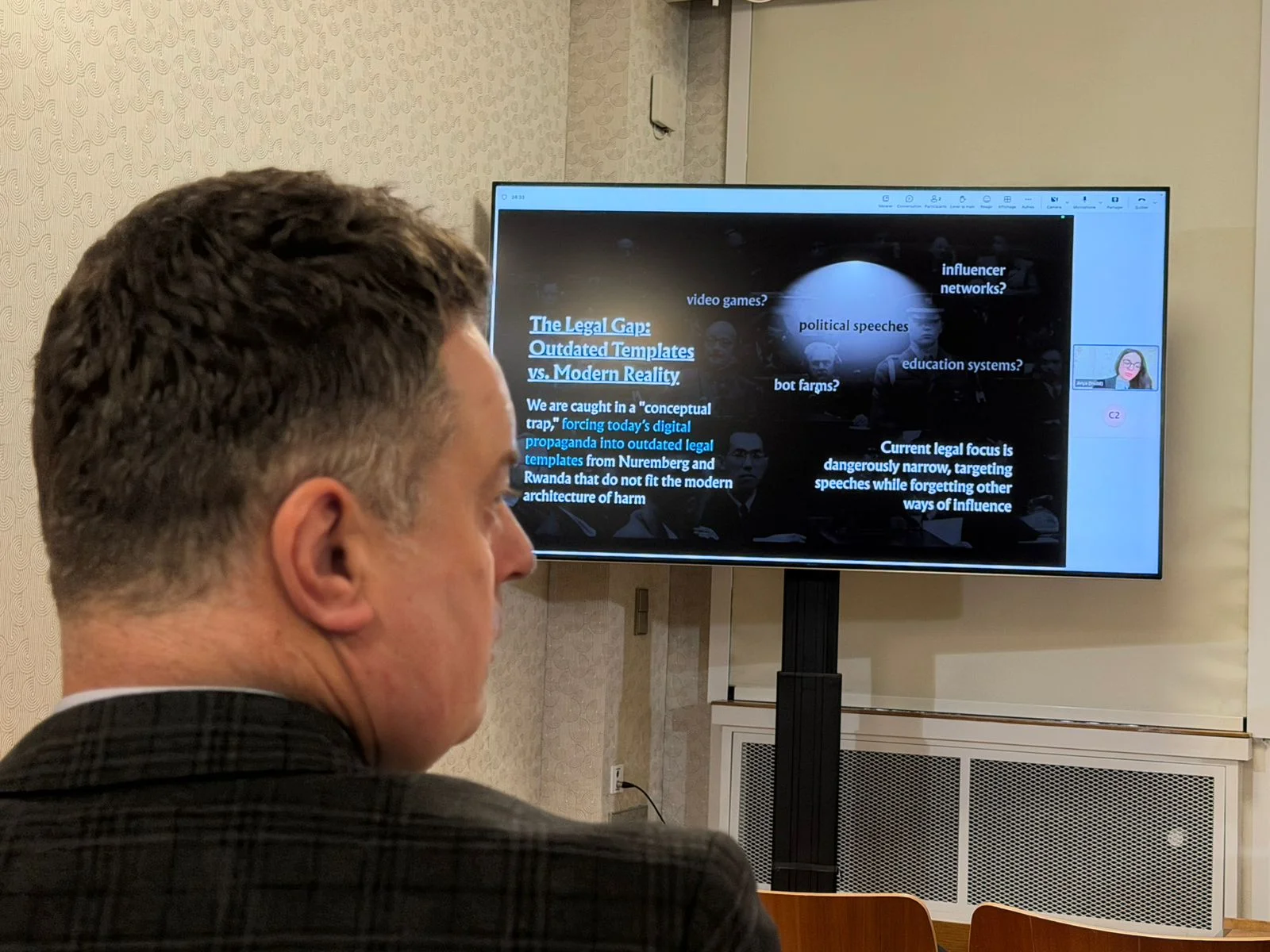
During the event, Anna Vyshniakova, Head of the NGO “LingvaLexa,” delivered a presentation titled “Pulling the Root: Ensuring Justice for War Propaganda to Protect Victims and Prevent Violence.” The presentation addressed the role of war propaganda in shaping and sustaining violence, as well as the need to ensure accountability for crimes related to war propaganda.
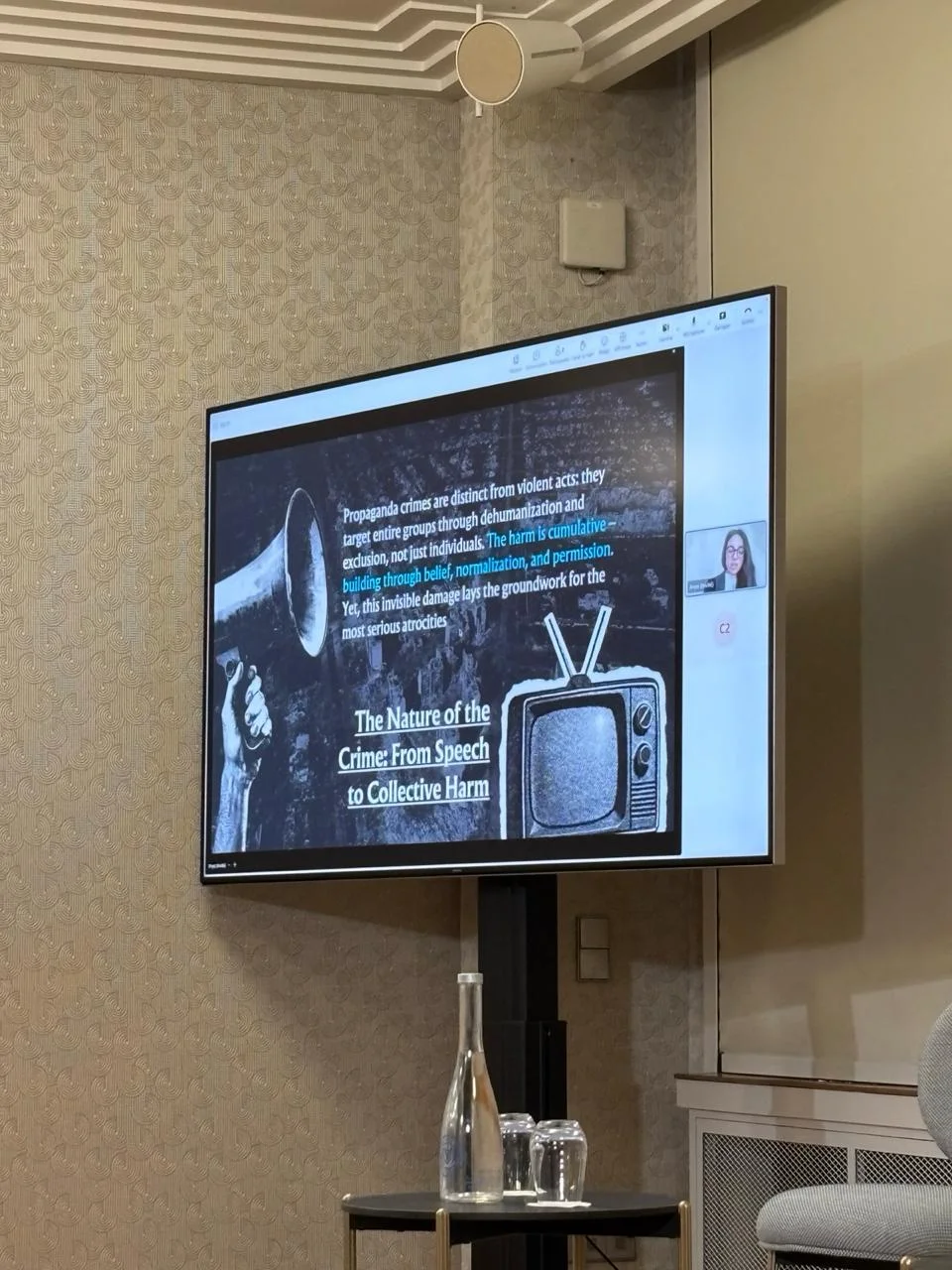
In her remarks, Anna emphasized that propaganda should not be viewed merely as an informational accompaniment to war or as a background phenomenon. Instead, it performs a systemic function by creating the moral and social conditions in which violence becomes acceptable – and even justified. Through processes of dehumanization, the exclusion of entire groups from the circle of those considered “worthy of protection,” the normalization of aggression, and the cultivation of a sense of impunity, propaganda gradually shapes a social environment in which the gravest international crimes become possible.
It was further highlighted that the harm caused by propaganda is cumulative. It develops through repeated narratives that gradually reshape social perceptions of what forms of violence are considered acceptable. Such communication strategies create what may be described as a “moral and social green light” for perpetrators, promising justification, rewards, or impunity. In this context, propaganda functions as a mechanism that strips victims of their status as subjects of rights, transforming them into “enemies,” “targets,” or even “non-humans.”
Particular attention was also paid to the fact that contemporary propaganda systems operate as structured ecosystems. They involve political leadership, media institutions, networks of commentators, and the production and amplification of scalable narratives. This perspective allows propaganda to be understood not as a collection of isolated statements but as a systemic instrument of war that plays a critical role in legitimizing aggression and violence.
Within this framework, it was emphasized that ensuring the rights of victims of war crimes, crimes against humanity, and genocide is impossible without addressing the informational mechanisms that contribute to the commission of such crimes. Therefore, an important task for the international legal community is to further develop approaches to investigating and legally qualifying war propaganda as part of broader criminal practices, as well as to establish effective mechanisms to hold accountable those who create and disseminate propaganda systems.
Anna Vyshniakova’s participation in the event took place within the framework of an international advocacy campaign aimed at drawing attention to war propaganda as a tool of aggression and promoting approaches to ensuring accountability for crimes related to propaganda.
The campaign is part of the project “Developing an international advocacy strategy to ensure accountability for crimes related to war propaganda” implemented by NGO LingvaLexa. The project is produced by NGO LingvaLexa with the support of the Governments of Norway and Sweden within the Askold & Dir Fund, administered by ISAR Ednannia.