LingvaLexa’s Russian Media Observatory Selected for Democracy Tech Fellowship 2026
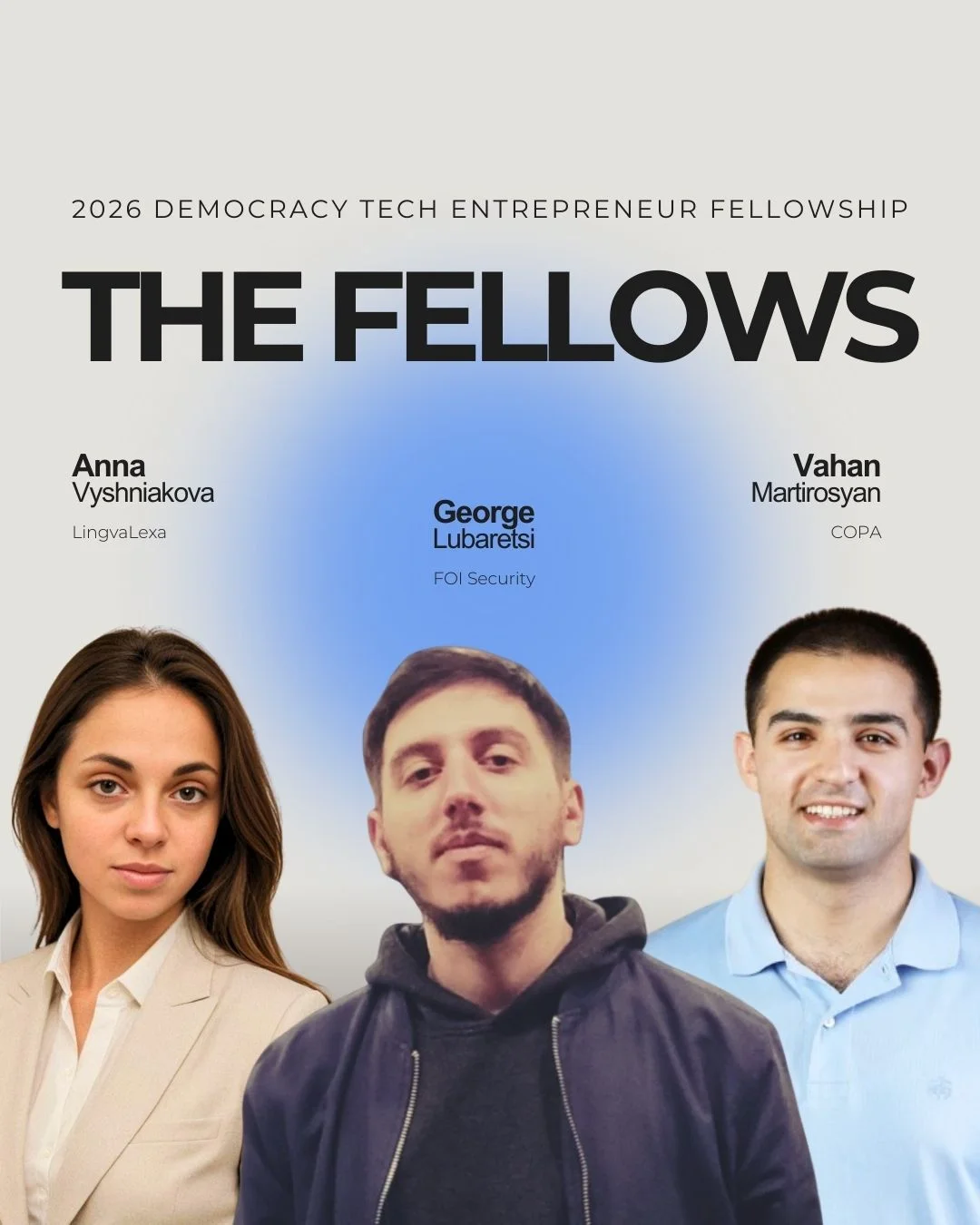
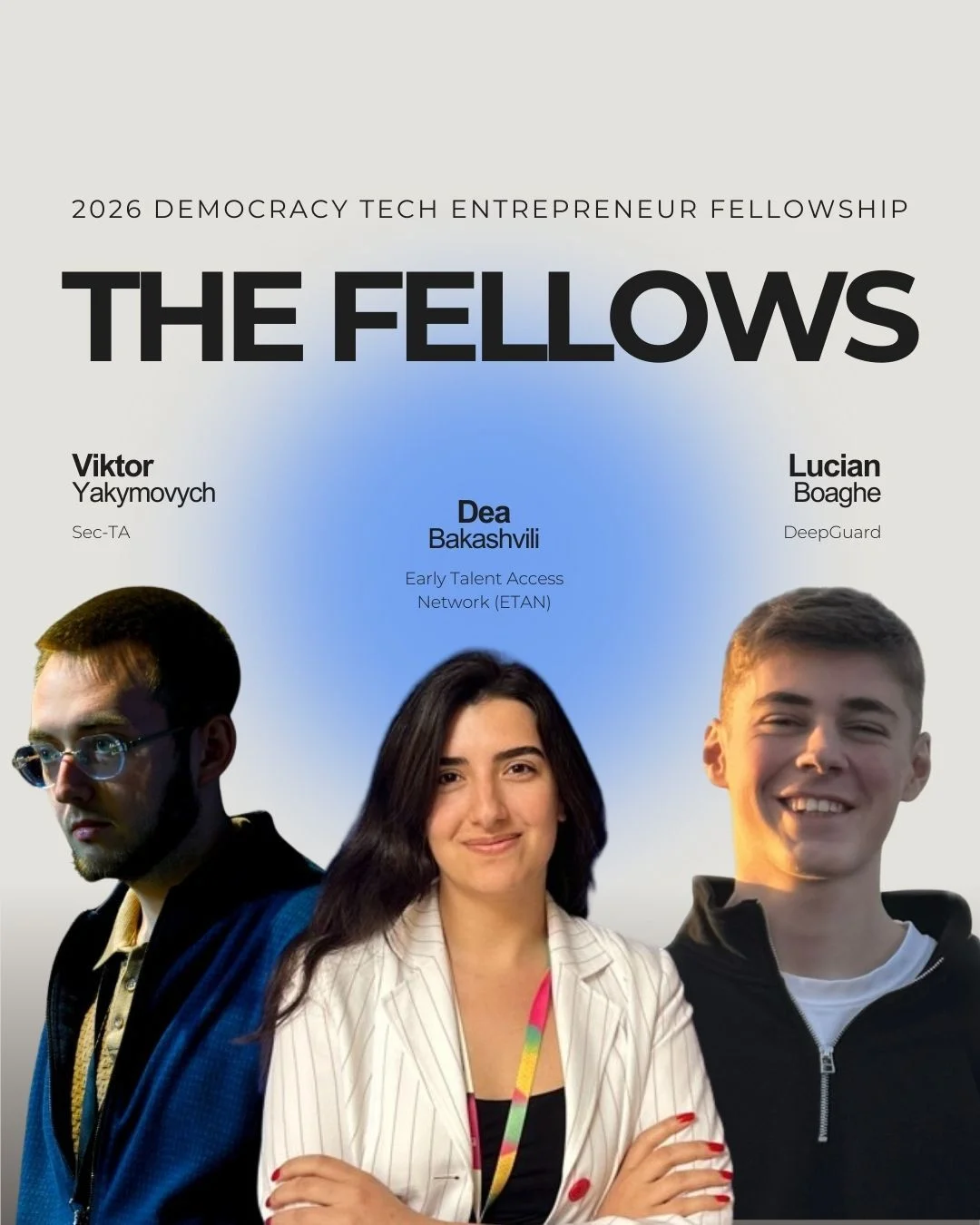
The LingvaLexa's project has been selected for the Democracy Tech Fellowship 2026 — an international fellowship program for teams developing technological solutions to protect democracy. Each year, the program brings together NGOs and startups from different countries and offers mentorship from international experts, access to professional events, pitch sessions, and support for project development. The selection of our Russian Media Observatory project for participation in the program confirms its relevance and practical value as a tool, as well as international recognition of our approach.
This project began as a response to a very specific challenge—the need for systematic, precise, and legally relevant analysis of propaganda in the context of war. We worked within a chaotic information environment in which hate speech often goes unnoticed and does not receive adequate attention from law enforcement. As our team consistently emphasizes, legal mechanisms for ensuring justice must be adapted to the challenges of modernity. Unfortunately, while digital reality is already reaching the Moon, the law is slowly dragging along outdated approaches and tools, failing to keep pace with the scale and speed at which crimes are committed in the reality of the twenty-first century.
In the context of information warfare, the Russian propaganda machine produces enormous volumes of content. Properly processing this content requires time and human resources that no law enforcement system possesses. The excess and lack of structure in the data significantly complicate analysis: from a technical standpoint, it is necessary to review and select, from colossal volumes, precisely those fragments that have evidentiary value.
The LingvaLexa team, working closely with the law enforcement sector on investigations of propaganda-related crimes, has developed an effective and modern solution — the Russian Media Observatory, an artificial-intelligence-based tool that enables the analysis and filtering of archives of Russian propaganda and the identification, within the overall data set, of statements that may be subject to criminalization. We combine advanced language models with legal expertise and expert verification of results. Our tool significantly reduces the time required to analyze propaganda content, decreases the workload on investigators and analysts, and helps preserve their psychological resilience.
For us, this is not merely a nomination. The Democracy Tech Fellowship has become a turning point: it helped us realize that the initiative can and should grow and scale. Through participation in the Fellowship, we will be able to strengthen the tool—making it more accurate and ready for integration into the work of law enforcement agencies, analysts, and lawyers. It accelerates the preparation of evidentiary materials for investigations, human rights advocacy, and court proceedings, bringing closer the real possibility of holding perpetrators accountable.
Although the project emerged from the Ukrainian context, its logic is not limited to a single country. The tool can be adapted to other linguistic environments and regions and used to analyze propaganda of hatred and war anywhere. At stake is the protection of human dignity, the strengthening of democratic resilience, and the обеспечение accountability for the gravest international crimes—regardless of geography.
If you are interested in contributing to the development of this project as a partner, mentor, expert, or investor, we would be glad to collaborate. You can contact us by email at: [email protected]